Many people who cold plunged before pregnancy want to know when they can get back to it, and new mums often ask us whether an ice bath is safe while breastfeeding. This guide is not medical advice. It sets out the questions worth asking your doctor or midwife, and how to ease back in once you have the all clear.
Speak to your doctor or midwife first
Every pregnancy and birth is different, so there is no single date when cold plunging becomes right for everyone. Before your first plunge after having a baby, check with the healthcare professional who looks after you, ideally at your postnatal check. It is especially important if you:
- had a caesarean section, a tear or stitches that are still healing
- are still bleeding after the birth
- had high blood pressure, pre-eclampsia, a heart condition or circulation problems during pregnancy
- are taking any medication
- feel dizzy, faint or unusually tired
Questions to ask at your postnatal check
- Is it safe for me to start cold water immersion, and from when?
- Are any wounds or stitches fully healed for immersion in water?
- Is there anything about my blood pressure or circulation I should be careful of?
- Is there anything I should know about cold exposure while breastfeeding?
Cold plunging during pregnancy
Do not start cold plunging during pregnancy without speaking to your doctor or midwife first. Sudden cold exposure raises heart rate and blood pressure, and pregnancy already places extra demands on your heart and circulation.
Cold plunging and breastfeeding
There is very little research on cold water immersion while breastfeeding. Some mums prefer to feed or express before a plunge so they are comfortable, and to make sure they are warm and well hydrated afterwards. If you have any concerns about your milk supply or feeding, speak to your midwife, health visitor or a lactation consultant before you start.
Easing back in once you have the all clear
- Start warmer and shorter. Try 12°C to 15°C for 30 seconds to a minute, and build up slowly over several weeks.
- Never plunge alone in the early days, and never with your baby nearby unattended.
- Breathe slowly and get out straight away if you feel dizzy, faint or unwell.
- Warm up gently afterwards with dry clothes and a warm drink.
- Stay hydrated, particularly in the UAE heat and if you are breastfeeding.
- Listen to your body. Sleep is short with a newborn, so some days a rest is the better choice.
Why many mums come back to it
For many people, a few minutes in a cold plunge is the one moment of the day that is entirely theirs. Mums who plunged before pregnancy often tell us they missed the feeling of stepping out awake and clear-headed. Coming back to it gradually, with your doctor's support, can be a good way to rebuild a routine.
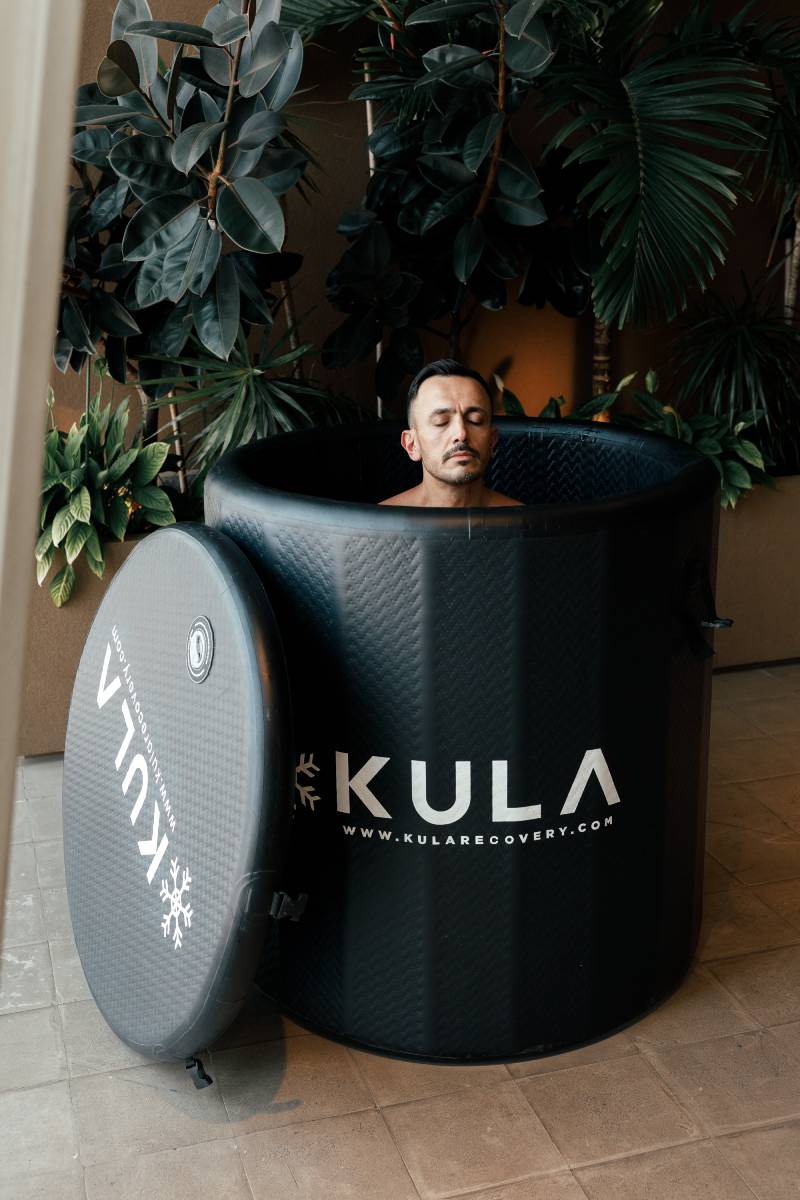
If you are thinking about a cold plunge at home, our team can talk you through the options. KULA plunges come with a chiller that holds the water at the temperature you set, so you can start warmer and adjust over time. See the cold plunge range.
Related from KULA: see our guides to ice bath prices in Dubai.
Frequently asked questions
Can I take an ice bath while pregnant?
Do not start cold plunging during pregnancy without speaking to your doctor or midwife first, as cold exposure raises heart rate and blood pressure.
When can I cold plunge after giving birth?
It depends on your birth and recovery. Ask your doctor or midwife, ideally at your postnatal check, and wait until any wounds or stitches have healed and bleeding has stopped.
Can I cold plunge while breastfeeding?
There is little research on this. Speak to your midwife, health visitor or a lactation consultant first, and if you go ahead, start with short, warmer sessions and stay well hydrated.
This article is general information, not medical advice. Always follow the guidance of your own doctor or midwife.